Why your ponytail palm leaves are turning yellow
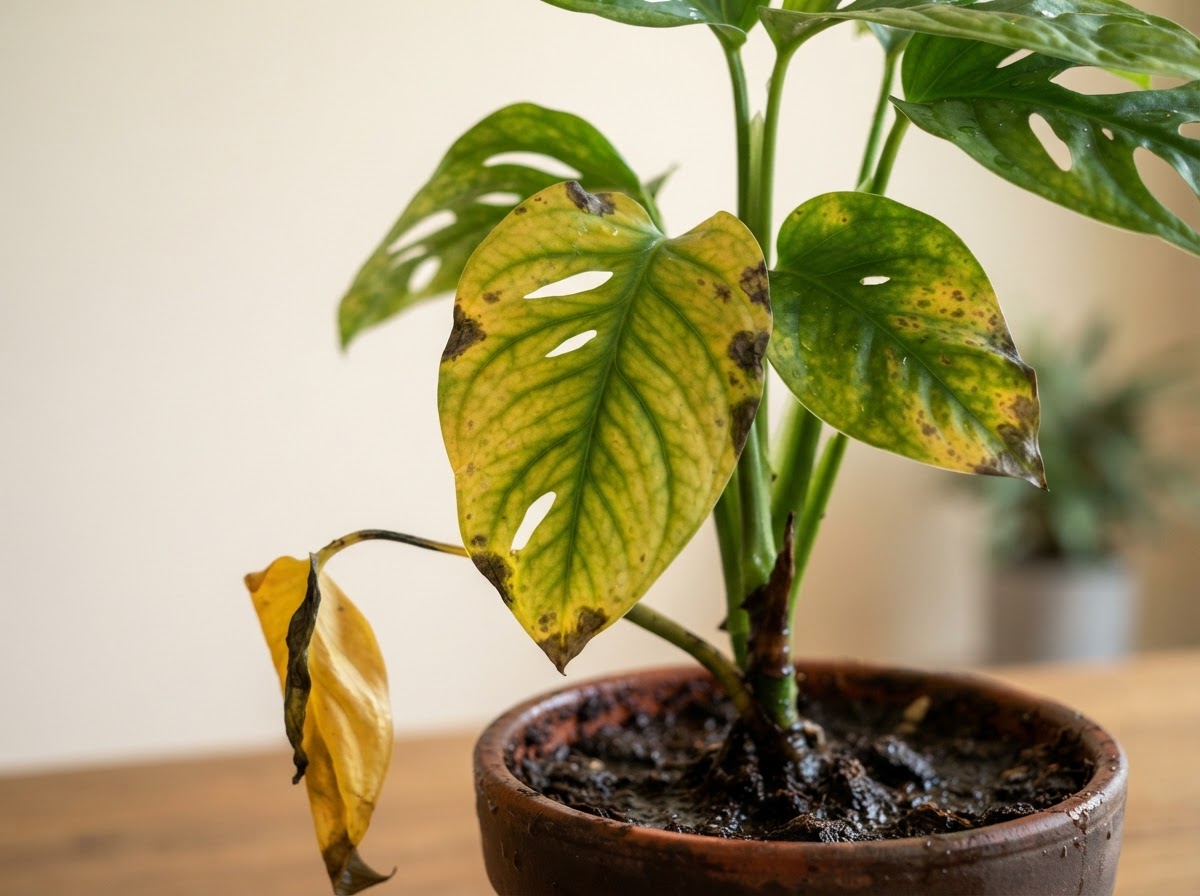
Good news first — yellow leaves on a ponytail palm are almost always fixable, and you caught it. The usual culprit is overwatering. Let's walk through what your plant's telling you and how to set it right.
Not sure? Ask Thumbs about your Ponytail Palm leaves turning yellow →
Thumbs talks you through it, one question at a time. Free during early access.
Why are my ponytail palm leaves turning yellow?
Most often it's overwatering. Plants yellow from the bottom up when they're stressed — usually water, light, or nutrients. Check the soil first: if it's soggy, you've been too generous with the watering can.
Ponytail palms store water in their swollen base, so they rot fast in wet soil. Yellowing, soft leaves almost always mean too much water. Stop watering and let the soil go bone dry.
Should I cut the yellow leaves off my ponytail palm?
Yes — once a leaf is fully yellow it's not coming back, and it's draining energy your plant could spend on new growth. Snip it clean at the base with sharp scissors. A leaf that's only partly yellow can hang on a while longer while you fix the underlying issue.
How do I fix yellow leaves on my ponytail palm?
Start with the soil. Let the top inch or two dry before watering again, and make sure your pot actually drains. Then check light — a ponytail palm sitting too dark will slowly yellow. Fix one thing at a time so you know what worked.
Why is my ponytail palm turning yellow and soft at the base?
A soft, mushy, yellowing base is rot from overwatering — the plant literally can't hold any more water. If it's advanced, you may need to unpot it, trim away rotten tissue, and let it dry before repotting into fresh, dry cactus soil. Cut back on water sharply.
Not sure? Ask Thumbs about your Ponytail Palm leaves turning yellow →
Thumbs talks you through it, one question at a time. Free during early access.