How to spot and fix root rot in your orchid
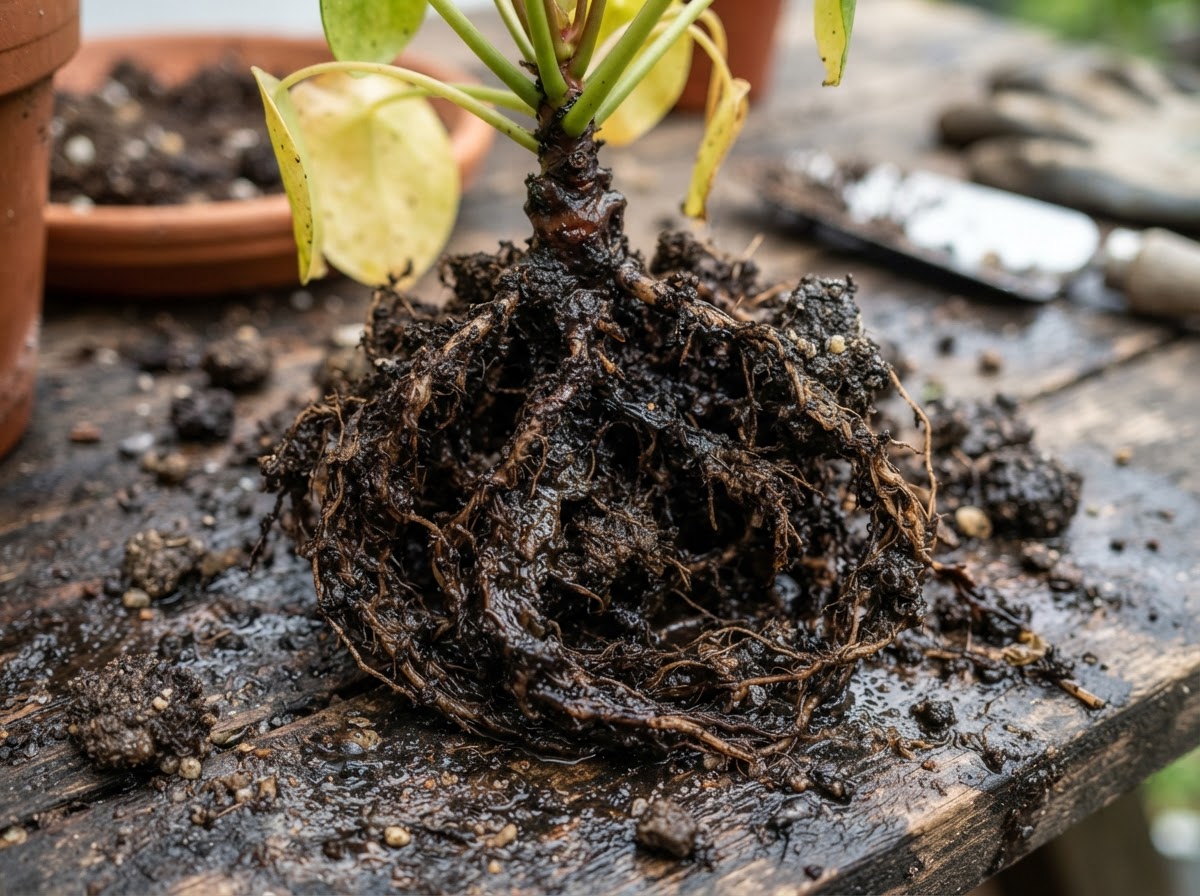
Root rot sounds scary, but you can save a orchid if you catch it. It happens when roots sit in soggy soil too long and start to decay. The fix is a repot — let's walk through it.
Not sure? Ask Thumbs about your Orchid root rot →
Thumbs talks you through it, one question at a time. Free during early access.
How do I know if my orchid has root rot?
The telltale signs: stems that feel soft or mushy at the base, soil that smells sour or swampy, and leaves yellowing even when you haven't overwatered lately. Lift the plant out and look at the roots — healthy roots are firm and pale; rotten ones are brown, slimy, and fall apart.
Can I save a orchid with root rot?
Yes, if there are still firm, healthy roots. Gently wash off the old soil, trim away every soft or dark root with clean scissors, and repot into fresh, dry soil in a clean pot. Hold off watering for a few days so the cut roots can heal.
How do I prevent root rot in my orchid?
Two things: a pot with a real drainage hole, and watering only when the top inch or two of soil is dry. Never let the plant sit in a saucer of leftover water. That's it — root rot is almost always a drainage problem.
Not sure? Ask Thumbs about your Orchid root rot →
Thumbs talks you through it, one question at a time. Free during early access.