Orchid care
Phalaenopsis Moth Orchid
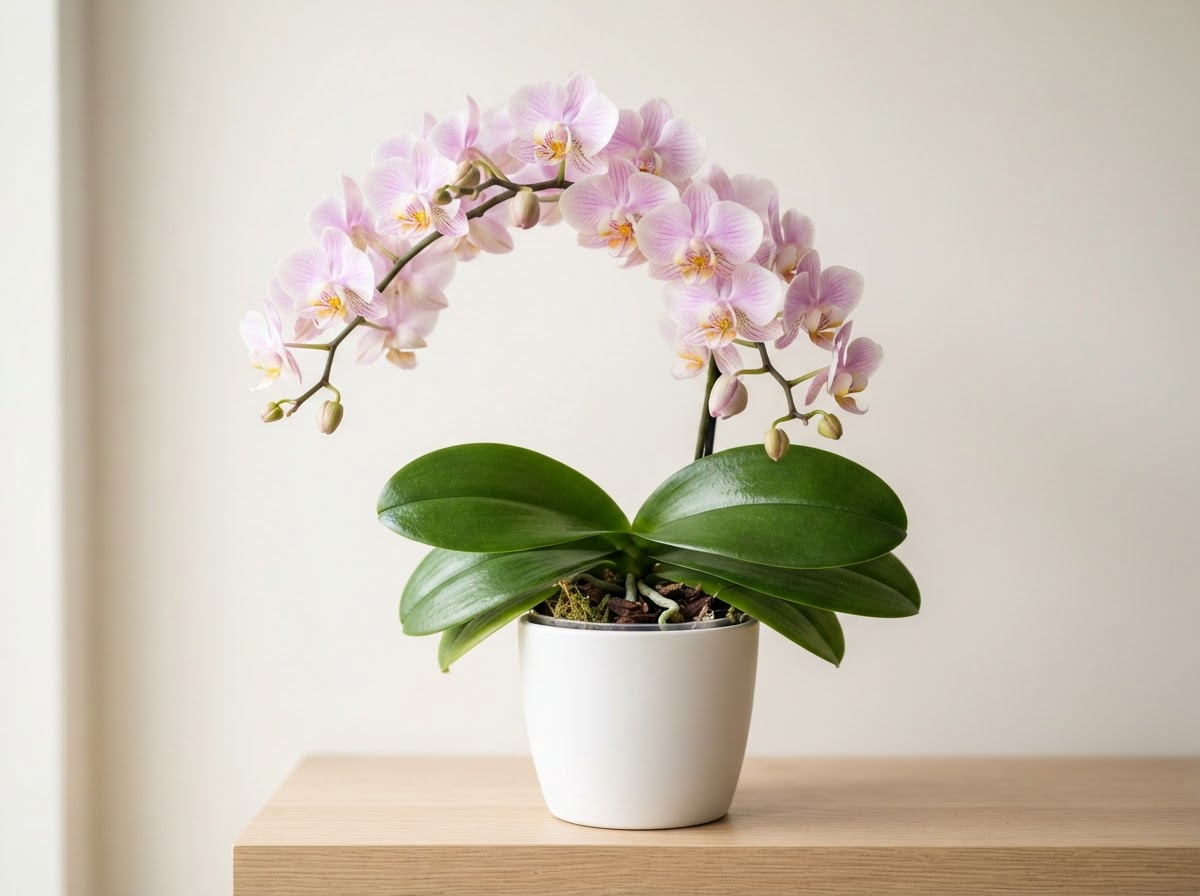
Elegant arching blooms that last for months. The moth orchid is the friendly gateway to orchids — bright light, bark not soil, and a careful watering rhythm.
Light
Bright, indirect light — an east window is ideal. The leaves should be a grassy green; dark green means too little light, red-tinged means too much.
Water
Water once a week by running room-temperature water through the bark, letting it drain fully. Never let the roots sit in water — that rots them fast.
In bark, the roots want air as much as water. When in doubt, wait a day.
Soil & pot
Orchids don't grow in soil — use orchid bark mix. A clear plastic pot with drainage slits lets you see the roots (green = hydrated, silver = thirsty).
Humidity & temperature
They like 50–70% humidity. A pebble tray or grouping plants helps. Keep them 65–80°F; a slight drop at night encourages reblooming.
Reblooming
After blooms drop, cut the spike above a node. With good light and a nighttime temperature drop, it'll often push a new spike.
Not sure? Ask Thumbs about your Orchid →
Thumbs talks you through it, one question at a time. Free during early access.
Common orchid problems
Something off with your orchid? Jump to the symptom — or just ask Thumbs.