Why your English ivy leaves are turning yellow
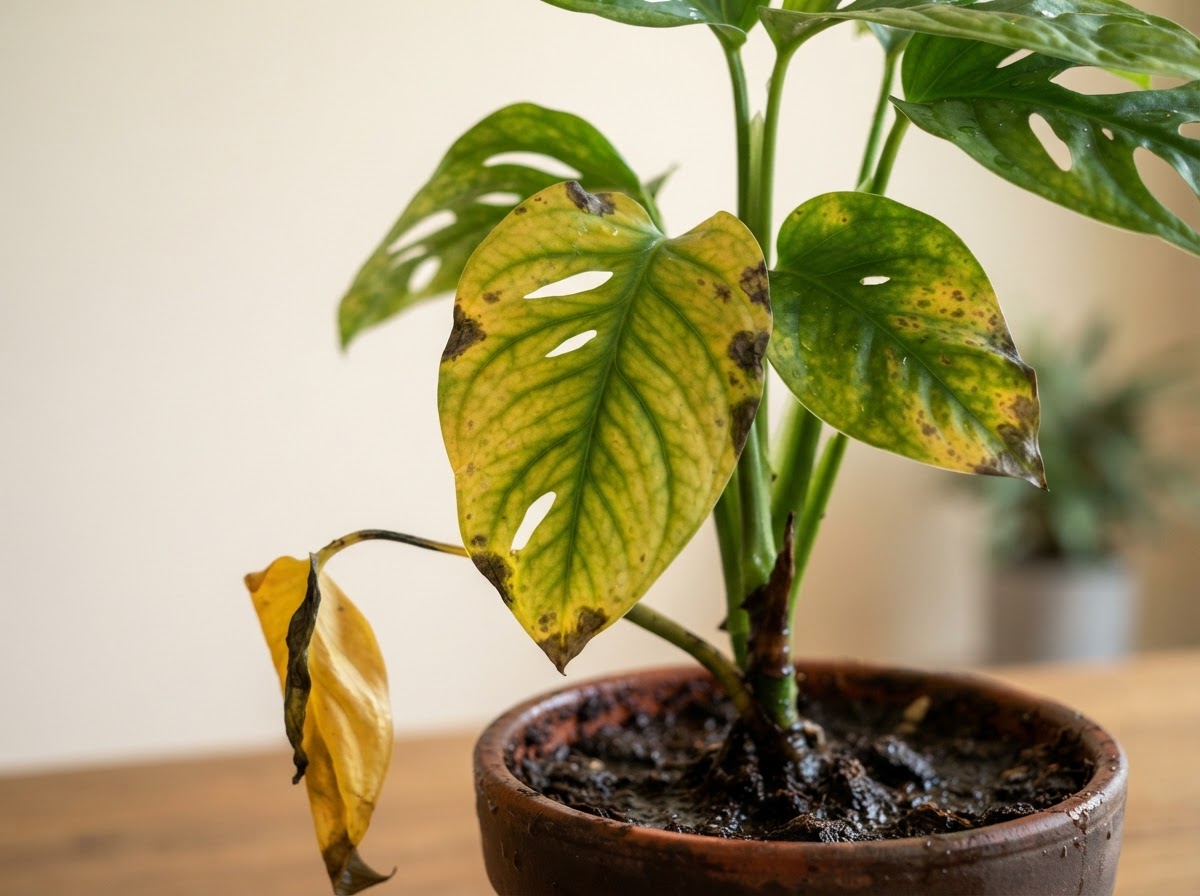
Good news first — yellow leaves on a English ivy are almost always fixable, and you caught it. The usual culprit is overwatering, dry air, or spider mites. Let's walk through what your plant's telling you and how to set it right.
Not sure? Ask Thumbs about your English Ivy leaves turning yellow →
Thumbs talks you through it, one question at a time. Free during early access.
Why are my English ivy leaves turning yellow?
Most often it's overwatering, dry air, or spider mites. Plants yellow from the bottom up when they're stressed — usually water, light, or nutrients. Check the soil first: if it's soggy, you've been too generous with the watering can.
English ivy yellows from soggy soil, dry air, or spider mites. Check the soil moisture first, then inspect the undersides of leaves for tiny webbing or speckling — mites love dry air. If it's bone dry, water it; if it's soggy, let it dry out.
Should I cut the yellow leaves off my English ivy?
Yes — once a leaf is fully yellow it's not coming back, and it's draining energy your plant could spend on new growth. Snip it clean at the base with sharp scissors. A leaf that's only partly yellow can hang on a while longer while you fix the underlying issue.
How do I fix yellow leaves on my English ivy?
Start with the soil. Let the top inch or two dry before watering again, and make sure your pot actually drains. Then check light — a English ivy sitting too dark will slowly yellow. Fix one thing at a time so you know what worked.
Why is my English ivy turning yellow and looking dusty?
A dusty, stippled look with yellowing leaves is a classic spider-mite sign — they thrive in warm, dry air. Wipe the leaves down, raise the humidity, and treat with insecticidal soap if needed. Keep it away from heating vents.
Not sure? Ask Thumbs about your English Ivy leaves turning yellow →
Thumbs talks you through it, one question at a time. Free during early access.