English Ivy care
Hedera Helix
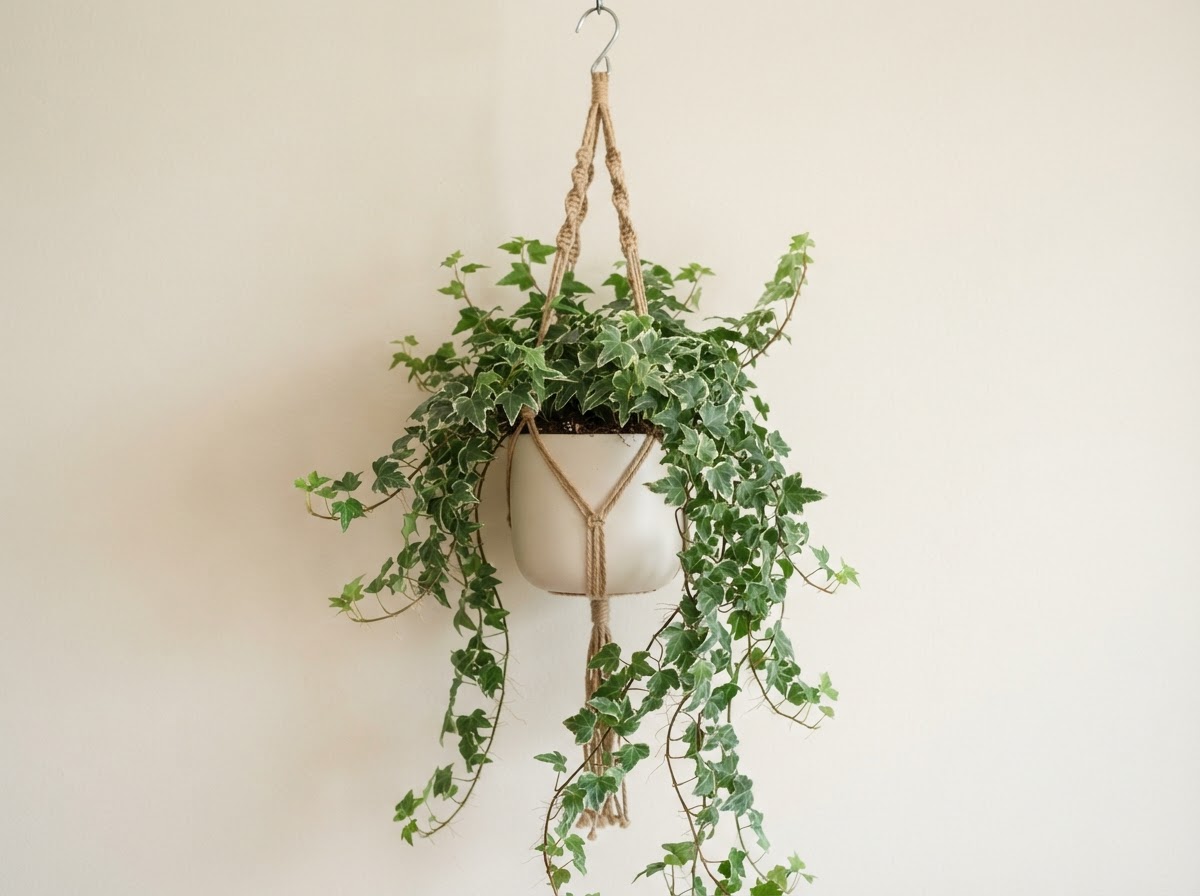
Lobed, variegated leaves on vining stems that trail and climb. English ivy is graceful and fast — it just wants bright-ish light, cool air, and not to dry out completely.
Heads up — English Ivy is toxic to cats and dogs per ASPCA data. Keep it out of reach of pets, and check our toxicity checker for pet-safe alternatives.
Light
Bright to medium indirect light keeps the variegation vivid. It tolerates lower light but grows sparse and loses its patterning there.
Avoid direct sun, which scorches the leaves.
Water
Keep the soil lightly moist but not soggy. Ivy dislikes drying out completely — the leaves crisp at the edges — but rots just as fast in standing water.
Reduce slightly in winter.
Soil & pot
A well-draining, peaty potting mix. A drainage hole is required.
Humidity & temperature
It likes humidity and cool air — spider mites are its nemesis in warm, dry rooms. Mist it, keep it away from heating vents, and aim for 50–70°F.
Propagation
Snip a stem cutting with a few nodes and root it in water or soil. It roots quickly and easily.
Not sure? Ask Thumbs about your English Ivy →
Thumbs talks you through it, one question at a time. Free during early access.
Common english ivy problems
Something off with your english ivy? Jump to the symptom — or just ask Thumbs.