String of Pearls care
Senecio Rowleyanus
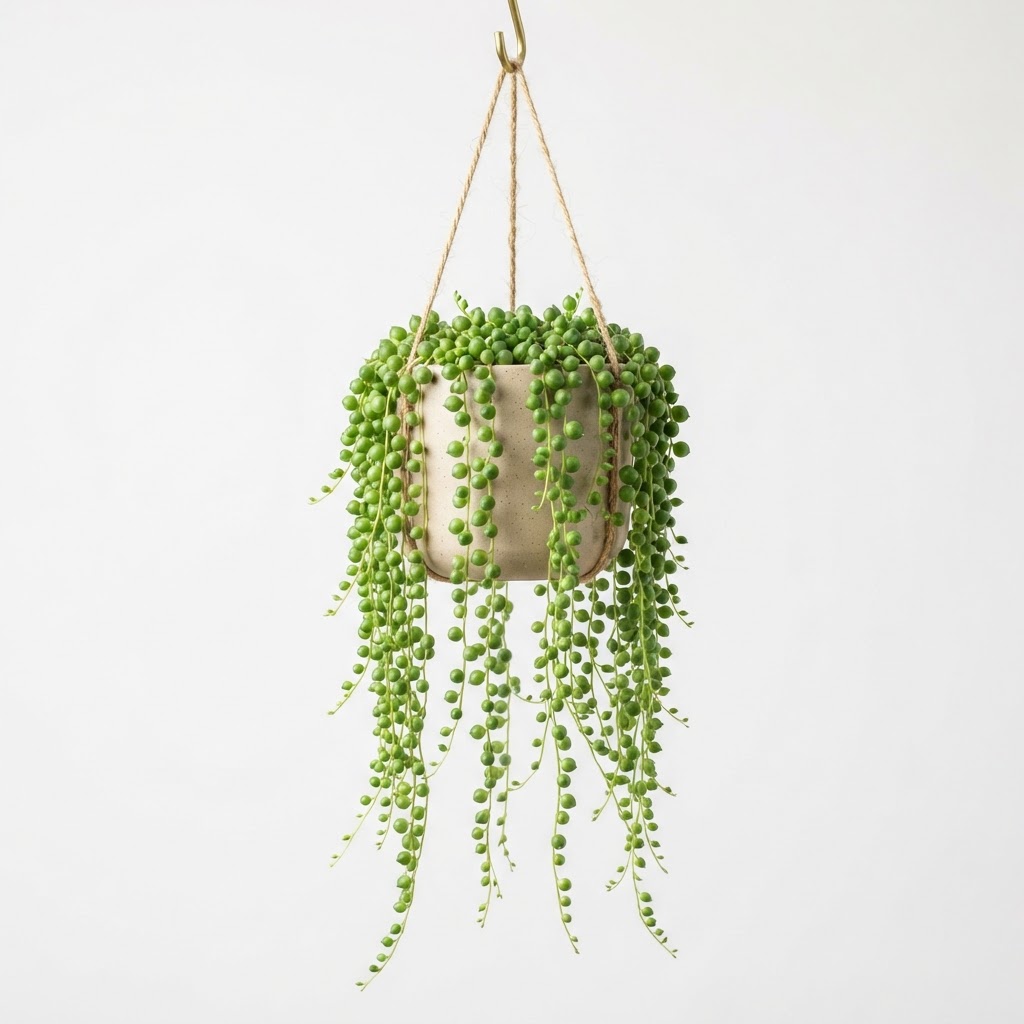
Cascading strands of small, round green beads that spill over the edge of a pot like a living necklace. String of pearls is a trailing succulent — it wants bright light and to dry out between waterings, and it looks stunning in a hanging planter.
Heads up — String of Pearls is toxic to cats and dogs per ASPCA data. Keep it out of reach of pets, and check our toxicity checker for pet-safe alternatives.
Light
Bright, indirect light is ideal — a spot near a bright window keeps it full and trailing. It tolerates some direct morning sun, but harsh midday sun can shrivel the pearls.
Too little light and the strands grow sparse and stretched between beads.
Water
Let the soil dry out completely between waterings — those little pearls hold water, so it prefers a dry-out to constant moisture. Every 2 weeks is typical; less in winter.
Overwatering rots it fast. When in doubt, wait — a slightly shriveled pearl is a sign to water; a mushy one is a sign you've watered too much.
Soil & pot
A fast-draining mix — cactus soil or potting mix cut heavily with perlite and sand. A drainage hole is essential. A shallow pot suits its shallow roots.
Humidity & temperature
It likes it dry and warm — 65–80°F. Average home humidity is perfect; it doesn't need misting. Keep it away from cold drafts.
Propagation
Lay a strand on top of moist soil and it'll root at the nodes where pearls meet the stem, or snip a cutting and tuck the cut end into soil. It roots readily.
Not sure? Ask Thumbs about your String of Pearls →
Thumbs talks you through it, one question at a time. Free during early access.
Common string of pearls problems
Something off with your string of pearls? Jump to the symptom — or just ask Thumbs.