Staghorn Fern care
Platycerium Bifurcatum
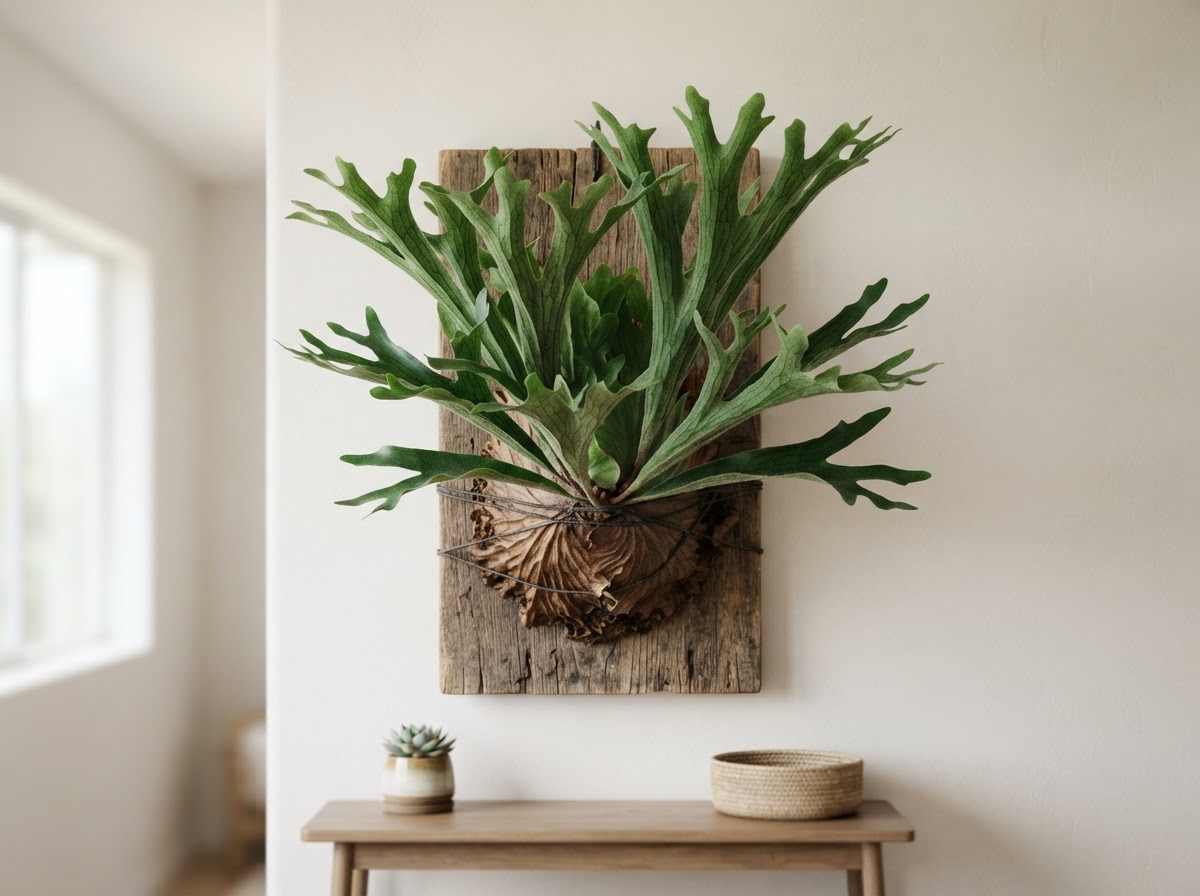
The antler-like, epiphytic Staghorn Fern is one of the most unusual cat-friendly house plants, thriving in warm, humid environments. It grows on trees in the wild, so it's happiest mounted on a board or in a chunky basket — not buried in soil.
Light
Bright, indirect light is ideal — an east or bright north window works well. The shield fronds should be a soft green; pale means too much light, dark green means too little.
Avoid direct midday sun, which scorches the antler fronds.
Water
Because it's an epiphyte, water it by soaking the root ball or mounted board thoroughly, then letting it dry until the fronds feel slightly soft — usually once a week in summer, less in winter.
Overwatering rots it fast. If mounted, dunk the whole board in a tub for a few minutes, let it drip dry, and hang it back up.
Soil & mounting
Staghorns don't need soil. Mount it on a board with sphagnum moss behind the shield frond, or grow it in a hanging basket of orchid bark and chunky moss. The shield frond needs to press against the mount to anchor the plant.
Humidity & temperature
It loves humidity — 50% or higher keeps it lush. Mist the fronds in dry homes. Keep it warm, 60–80°F, and away from cold drafts.
Propagation
Mature staghorns produce offsets (pups) at the base. Carefully cut a pup with some roots and mount it on its own board. It's slow but reliable.
Not sure? Ask Thumbs about your Staghorn Fern →
Thumbs talks you through it, one question at a time. Free during early access.
Common staghorn fern problems
Something off with your staghorn fern? Jump to the symptom — or just ask Thumbs.