Rubber Tree care
Ficus Elastica
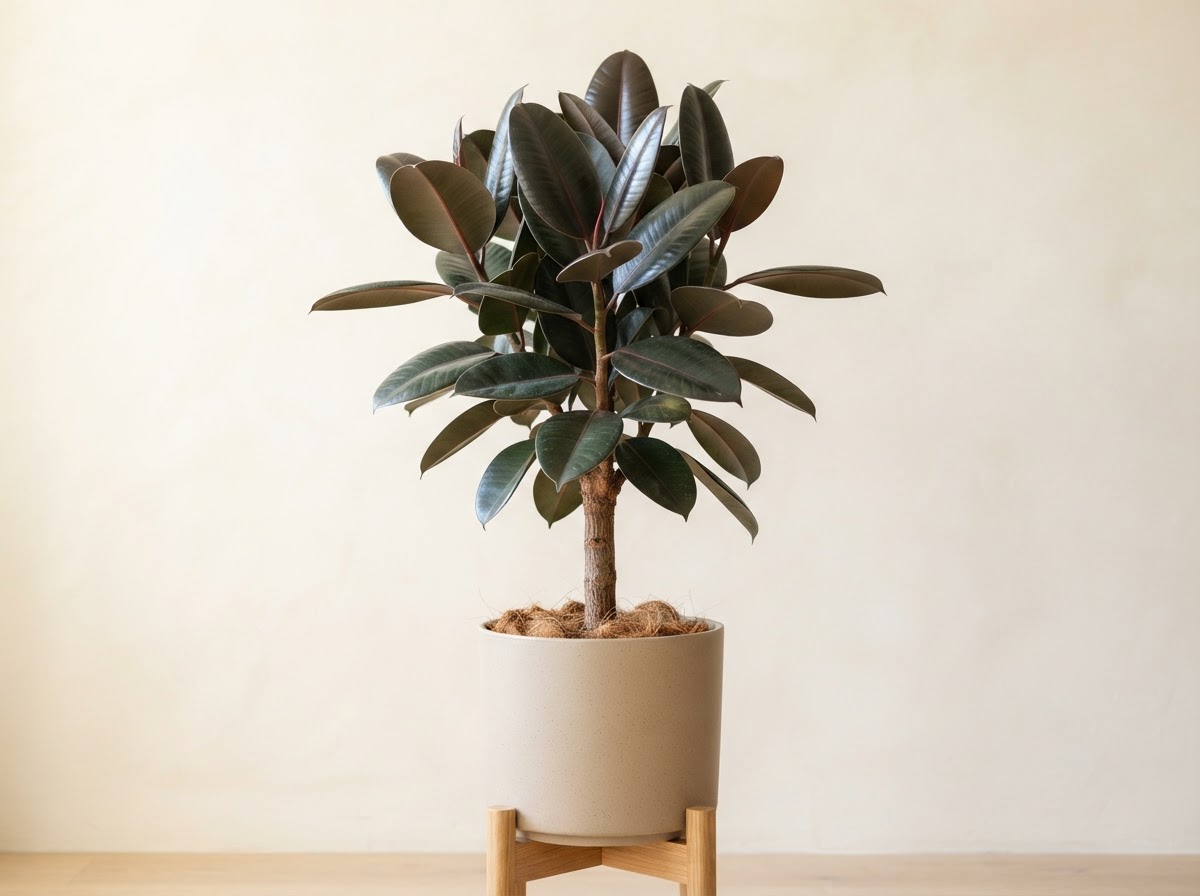
Big, glossy oval leaves on a sturdy upright trunk — a sculptural statement plant. Give it bright light and a little room to grow, and the rubber tree becomes a room-defining centerpiece.
Heads up — Rubber Tree is toxic to cats and dogs per ASPCA data. Keep it out of reach of pets, and check our toxicity checker for pet-safe alternatives.
Light
Bright, indirect light is ideal — more light means fuller, more vibrant leaves. It tolerates medium light but grows slowly and gets leggy there.
Some direct morning sun is fine; harsh midday sun can scorch the leaves.
Water
Water when the top couple inches of soil are dry. It likes a good soak followed by a dry-out — not constant moisture.
Reduce in winter when growth slows.
Soil & pot
A well-draining mix with some perlite or orchid bark. A drainage hole is essential, and a sturdy pot keeps the top-heavy plant upright.
Humidity & temperature
Average home humidity is fine; wipe the leaves now and then so they can photosynthesize. Keep it 60–80°F and away from cold drafts.
Propagation
Take a stem cutting and root it in water or soil, or air-layer a branch. It's slower than vining plants but reliable.
Not sure? Ask Thumbs about your Rubber Tree →
Thumbs talks you through it, one question at a time. Free during early access.
Common rubber tree problems
Something off with your rubber tree? Jump to the symptom — or just ask Thumbs.