Fiddle Leaf Fig care
Ficus Lyrata
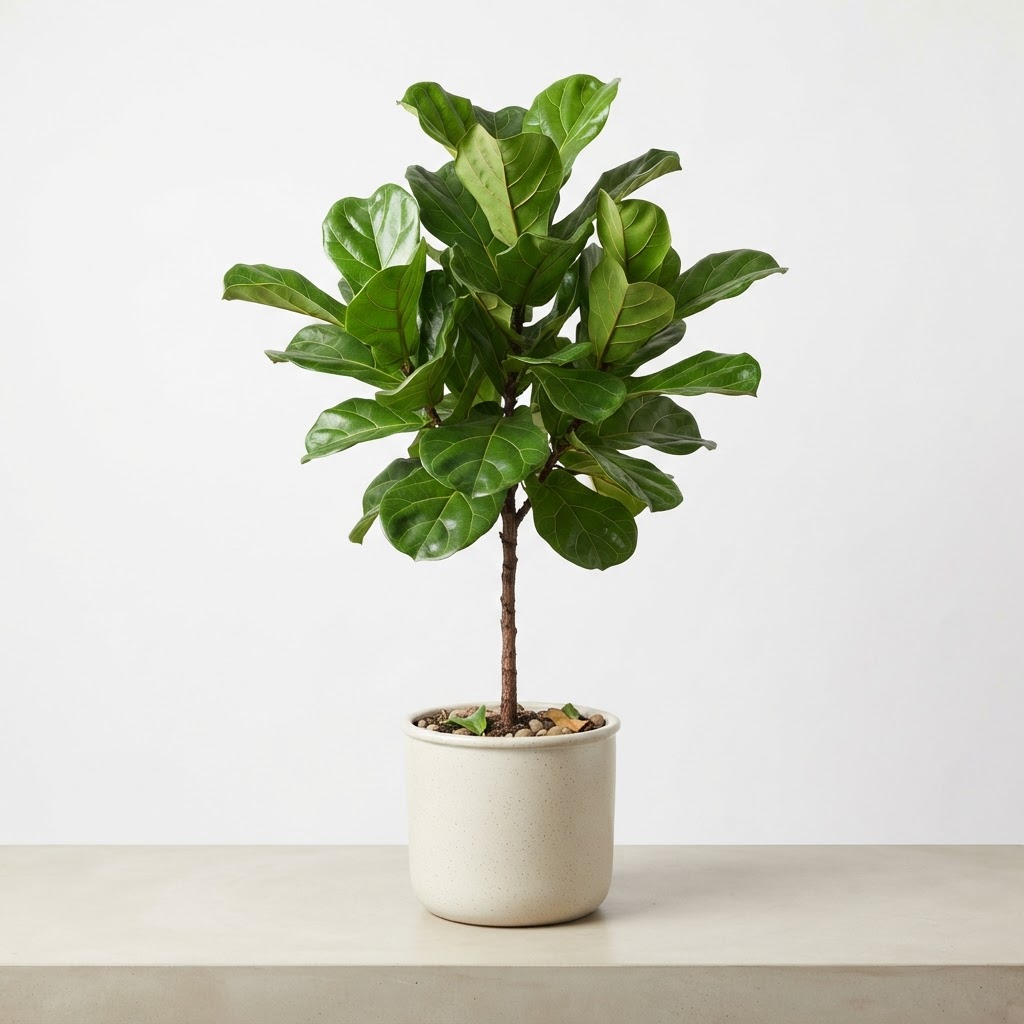
The Instagram celebrity — huge, violin-shaped leaves on a tall upright trunk. The fiddle leaf fig is gorgeous and a little dramatic: give it steady bright light and a consistent routine, and it rewards you with a sculptural centerpiece.
Heads up — Fiddle Leaf Fig is toxic to cats and dogs per ASPCA data. Keep it out of reach of pets, and check our toxicity checker for pet-safe alternatives.
Light
Bright, indirect light is non-negotiable — a spot right next to a large south or west window is ideal. It wants lots of light but not harsh midday sun beating directly on the leaves.
Too little light and it drops leaves fast; rotate it a quarter turn each week so it grows evenly toward the light.
Water
Water when the top couple inches of soil are dry — usually every 1–2 weeks. It likes a thorough soak followed by a clear dry-out, not constant moisture.
Consistency is everything: sudden changes in watering (or light, or being moved) cause it to drop leaves. Find a rhythm and stick to it.
Soil & pot
A well-draining mix with some perlite or orchid bark. A drainage hole is essential, and a sturdy pot keeps the top-heavy plant from tipping.
Humidity & temperature
It likes humidity and steady warmth — 60–75°F. Keep it far from cold drafts, heating vents, and AC units, all of which cause leaf drop. Wipe the big leaves now and then so it can photosynthesize.
Propagation
Root a stem cutting in water or soil, or air-layer a branch. It's slower than vining plants but works with patience.
Not sure? Ask Thumbs about your Fiddle Leaf Fig →
Thumbs talks you through it, one question at a time. Free during early access.
Common fiddle leaf fig problems
Something off with your fiddle leaf fig? Jump to the symptom — or just ask Thumbs.