Bird's Nest Fern care
Asplenium Nidus
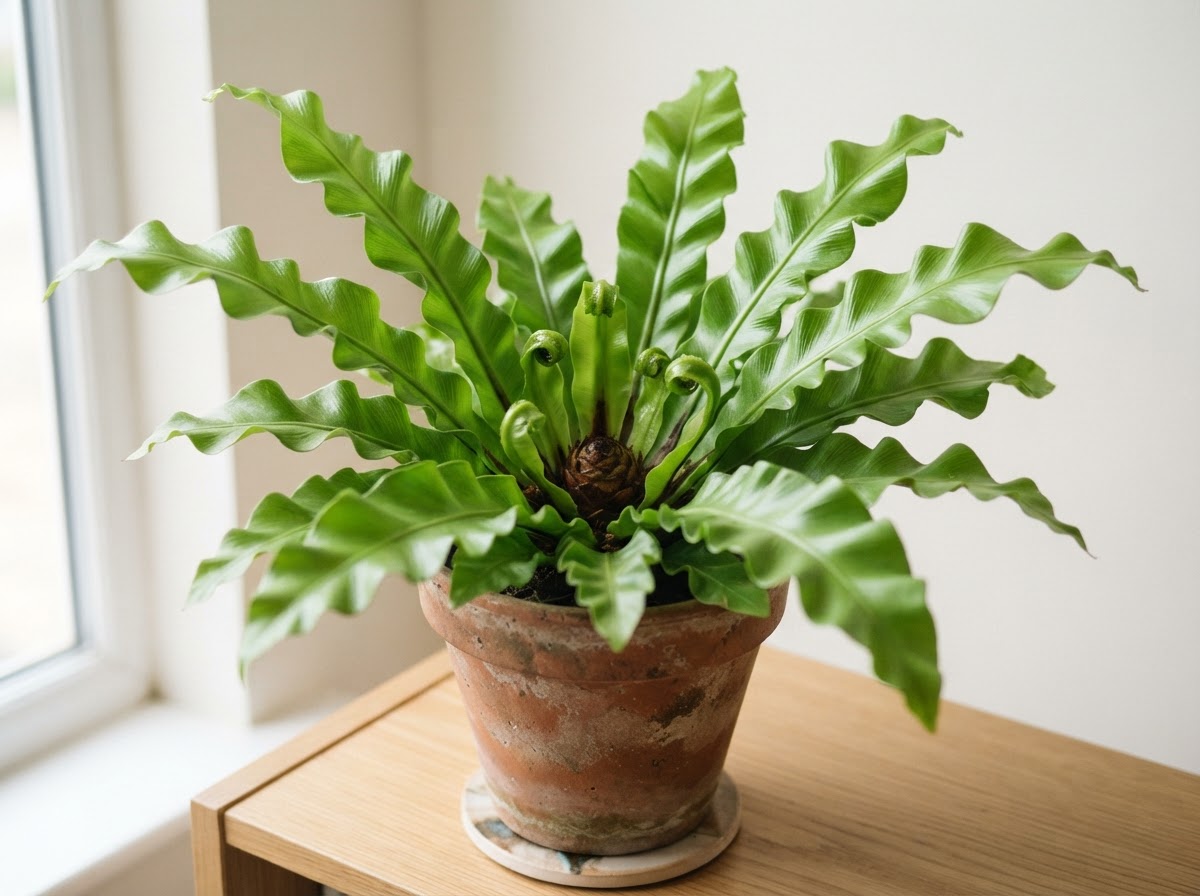
A fern with attitude — wavy, bright green fronds that unfurl from a central rosette instead of feathery plumes. The bird's nest fern is pet-safe, loves humidity, and is one of the easier ferns to keep happy indoors.
Light
Medium to bright indirect light. It naturally grows on trees in the wild, so it's used to dappled, filtered light beneath a canopy.
Keep it out of direct sun, which scorches the fronds brown. A north or east window is ideal.
Water
Keep the soil lightly and consistently moist — not soggy, never bone dry. Water when the top inch feels just barely dry to the touch.
Water the soil, not the center rosette — water pooling in the crown can rot the plant. Reduce slightly in winter.
Soil & pot
A rich, well-draining mix with some peat or coco coir to hold moisture. A drainage hole is essential.
Humidity & temperature
It loves humidity — aim for 50% or higher. A pebble tray, grouping plants, or a humidifier keeps the fronds lush. Dry air browns the tips fast.
Keep it 65–80°F and away from cold drafts and heating vents.
Propagation
Ferns grow from spores on the undersides of the fronds, which is slow and fiddly at home. Easiest path: buy a second one, or divide an older clumping plant at the roots.
Not sure? Ask Thumbs about your Bird's Nest Fern →
Thumbs talks you through it, one question at a time. Free during early access.
Common bird's nest fern problems
Something off with your bird's nest fern? Jump to the symptom — or just ask Thumbs.